Conversion Rate Optimization (CRO) for Roofers
More traffic doesn’t help much if visitors leave without calling. CRO for roofers is the work of finding where homeowners drop off on your website and fixing it, so more of the people who already find you end up booking an inspection. We track the calls and forms you get now, watch how people use your pages, then change what’s stopping them.
- Call and form tracking set up before any changes
- Fixes based on what real visitors do on your pages
- Works on WordPress, Elementor, other CMS and custom sites
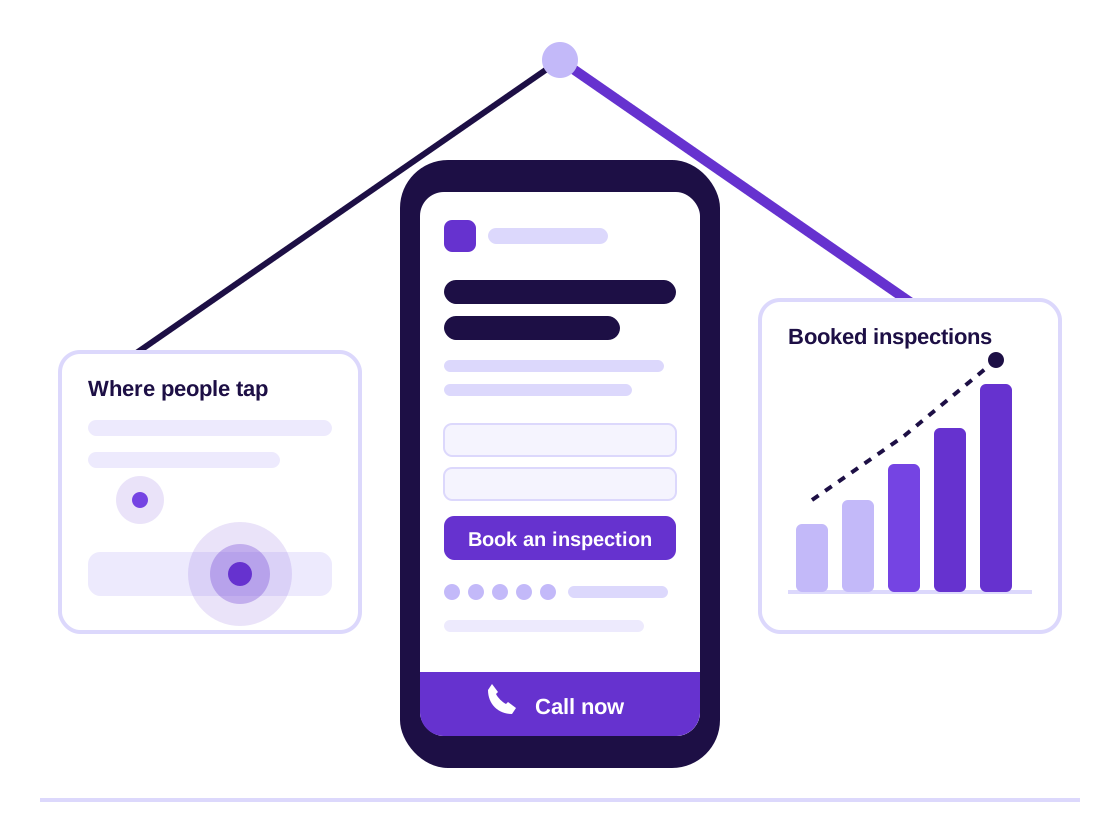
What CRO means for a roofing company
Your conversion rate is the share of website visitors who call you, fill in a quote form or send a message. Here’s a simple example. If 1,000 people visit your site in a month and 15 of them get in touch, your conversion rate is 1.5%.
Now say those same 1,000 visitors bring in 30 calls and forms. You didn’t rank higher or spend more on ads. The site just stopped losing people. That’s the point of CRO: more jobs from the traffic you already pay for, whether it comes from SEO or ads.
For roofers, the number that matters most comes after the form. A lead that never books an inspection isn’t worth much, so we look at booked inspections and signed jobs as well as calls.
Where roofing websites lose leads
These are the leaks we see most often when we review roofing websites.
Ad clicks sent to the home page
Someone searches “roof leak repair”, clicks your ad and lands on a home page about everything you do. Now they have to hunt for the thing they searched for, and plenty of them won’t bother.
A phone number you can’t tap
On a phone, your number should dial with one tap and stay in view as people scroll. If it’s part of an image or tucked into the footer, you lose the people who wanted to call right away.
Forms that ask too much
Every extra field is one more reason to stop. Name, phone, address and a line about the roof is usually enough to book an inspection.
No proof near the form
People decide whether to trust you right before they hit submit. Reviews, warranty details and your WSIB or WCB clearance belong next to the form, not on a page they’ll never open.
No idea what happens next
If the page doesn’t say who calls back and how soon, a homeowner with water coming through the ceiling will fill in three other roofers’ forms as well.
Calls that go to voicemail
Your website can do its job and the lead still gets lost. Missed calls after hours or on busy job days are easy to overlook, because they never show up in a website report.
Slow pages on mobile data
Large photos and heavy page builders can leave a page loading for several seconds on a phone. Someone looking for an emergency repair won’t wait for it.
One page selling every job
A page that tries to sell repairs, replacements, flat roofs and eavestroughs all at once doesn’t speak to anyone in particular. Each job needs its own page with its own call to action.
Nothing about cost or financing
Homeowners want a rough idea of what they’re getting into. A price range, a note on financing or a page on insurance claims keeps them on your site instead of a competitor’s.
What we measure before we change anything
CRO goes wrong when it starts with guesses. Before we touch a page, we make sure every lead gets counted and we can see where it came from.
- Call tracking. Dynamic number insertion shows a different tracking number to visitors from Google Ads, organic search, your Google Business Profile and Facebook, so you know which source made the phone ring. We use CallRail or a similar tool, and your main business number stays on your listings.
- Form and click tracking in GA4. Every form submission, tap on your phone number and chat message is set up as a key event in Google Analytics 4, through Google Tag Manager.
- Heatmaps and session recordings. Microsoft Clarity or Hotjar show where people tap, how far they scroll and where they give up.
- Booked inspections. We match leads against your CRM or job list, so we can see which pages and sources bring in real jobs and which bring in tire kickers.
A few weeks of this data usually makes the biggest problems obvious.
What we change on your pages
The fixes depend on what the tracking shows, but most of our work falls into these areas.
The top of the page
The first screen on a phone should say what you do, where you do it and how to reach you. We rewrite headlines and move the call button and form up to where people see them.
Calls and forms
Tap-to-call buttons, a call bar that stays on screen on phones, shorter forms, and multi-step forms where you really do need more details before an estimate.
Trust next to the ask
Google reviews, manufacturer certifications from brands like IKO, GAF or CertainTeed, warranty terms, association memberships and photos of your own crew, placed where people make up their minds.
Pages for each job and city
Separate pages for repairs, replacements, flat roofing and storm damage, and for the cities you serve, so each visitor lands on a page that matches what they searched for.
Speed on phones
Compressed photos, lighter pages and fixes for the Core Web Vitals problems that make pages slow or jumpy on mobile. Our technical SEO page covers this in more detail.
The thank-you page
After someone sends a form, tell them who will call, roughly when, and what to have ready. It stops a lot of people from contacting other roofers while they wait.
We work on WordPress, Elementor, other CMS platforms and custom-built sites. If your site needs a rebuild rather than fixes, we’ll tell you, and our roofing website design page explains what that involves.
Landing pages for Google Ads and Facebook
Paid traffic is where CRO pays off fastest, because you pay for every click. Sending ad clicks to your home page is a common and expensive mistake on roofing ad accounts.
We build landing pages that match the ad. A roof repair ad in Hamilton goes to a roof repair page for Hamilton, with one offer, one short form and a call button. Every call and form is tracked, so you can see your cost per lead and your cost per booked inspection, not just clicks.
Ad campaigns also send enough visitors to a single page to run proper split tests, so this is where we test headlines, offers and form layouts against each other.
Answering fast is part of conversion
A website can’t book a job by itself. Someone still has to answer the phone or call the form lead back, and the roofer who gets back to a homeowner first often gets the inspection.
So we also look at what happens after a lead comes in:
- How quickly form leads get a call back, and who gets notified
- Whether missed calls get an automatic text back
- Whether after-hours visitors can ask for a callback or send photos of the damage
- Whether leads go into a CRM such as JobNimbus, AccuLynx or Jobber, or sit in someone’s inbox
We don’t run your office, but we’ll show you where leads go cold and help you set up the alerts and follow-ups that stop it.
Honest testing on a roofing website
A/B testing needs a lot of visitors to give a reliable answer. Many roofing websites don’t get enough traffic to settle a split test in a few weeks, so be careful with anyone who promises a stream of test wins on a small site.
We work the way your traffic allows. On lower-traffic pages, we fix clear problems that show up in the recordings and tracking, then compare results before and after. On ad landing pages with steady paid traffic, we run proper split tests.
Roofing in Canada is seasonal, so we compare like with like. A slow February against a busy May tells you nothing about a new form. Where we can, we compare against the same months last year and look at leads per visitor rather than total leads.
Canadian details that affect conversions
- Consent on forms. If you plan to email or text people who fill in your form, Canada’s anti-spam law (CASL) requires their consent. A clear checkbox covers it without scaring anyone off.
- Privacy. Call recording and session recording tools collect personal information, so your privacy policy should say so under PIPEDA, and under Quebec’s Law 25 if you work there. We’ll flag what needs adding, though your lawyer should sign off on the wording.
- French pages for Quebec. If you serve Quebec, your buttons, form labels, error messages and thank-you pages need to work in French too, not just the main text.
- Seasonal messages. After a summer hailstorm, the top of your page might talk about hail damage and insurance claims. In late fall, it might be ice dams and leak repairs before winter. We help you change headlines and offers with the seasons.
How CRO for roofers works
1. Tracking first
We set up call tracking, GA4 events and session recordings, then check that every call and form is being counted.
2. Find the leaks
We go through recordings, call data and your pages on a real phone, then list the problems in order of how many leads they’re likely costing you.
3. Fix and test
We make the changes, starting with the ones most likely to bring in more calls, and run split tests where there’s enough traffic.
4. Report and repeat
Each month you see calls, forms and booked inspections by page and source, plus what we changed and what comes next.
What we need from you: access to your website and analytics, a list of the jobs you want more of, and a rough idea of how many of your leads book an inspection.
A quick conversion check you can do today
Answer yes or no for your own website:
- On your phone, can you call your business with one tap without scrolling?
- When you fill in your own quote form, is it short, and do you get a confirmation by email or text?
- Do your Google Ads send people to a page about the exact service they searched for?
- Are there reviews or certifications right next to your form?
- Does the page say how soon you’ll call back?
- If you call your business number after 6 p.m., does a homeowner reach someone or get a text back?
- Can you say how many calls your website brought in last month?
- Do you know how many of last month’s leads booked an inspection?
If you said no to three or more, there’s room to get more jobs from the traffic you already have.
CRO for roofers questions
What is CRO for roofers?
It’s the work of getting more calls, form leads and booked inspections from the people who already visit your website. We track where leads come from, find where visitors drop off, and fix those pages.
Do I need a new website for CRO?
Usually not. Most roofing sites can be improved by changing the pages you already have. If your site is too slow or too hard to edit, we’ll say so and explain what a rebuild would involve.
How long until I see more leads?
Setting up and checking tracking usually takes a week or two, and the first fixes often go live within the first month. How quickly you see the difference depends on your traffic and the season. A busy site in spring shows it sooner than a quiet site in January.
Will CRO changes hurt my Google rankings?
They shouldn’t. We keep the URLs, headings and content that rank, and many CRO fixes, such as faster pages and clearer service pages, help SEO as well. We check Search Console after each round of changes.
What tools do you use?
Usually GA4 and Google Tag Manager for tracking, CallRail or a similar tool for calls, and Microsoft Clarity or Hotjar for heatmaps and recordings. If you already pay for tools, we’ll use those.
What’s a good conversion rate for a roofing website?
It depends on where the traffic comes from. Visitors from an emergency repair ad behave very differently from people reading about shingle colours. That’s why we measure your own starting point by page and source and work to beat it, rather than chasing an industry average.
Can I buy CRO on its own?
Yes. CRO is sold on its own or alongside SEO, website design or ads. Ask for a free review and we’ll tell you what we’d work on first.
Do you work with my current web developer?
Yes. We can hand your developer a list of changes, or make them ourselves if you give us access. Either way, we track what happens after.
Get a free conversion review of your roofing website
Send us your website and the cities you serve. We’ll look at your pages on a phone, check how your calls and forms are tracked, and send you the changes we’d make first.