Facebook Ads for Roofers
Facebook and Instagram ads reach homeowners before they go looking for a roofer. That makes them a good fit for roof replacements, storm damage in a set area and seasonal offers, and a poor fit for someone with a leak right now. We run Meta ads for Canadian roofing companies, with lead forms that screen out time-wasters and follow-up that turns leads into booked inspections.
- Lead forms with questions that filter out tire kickers
- Set up for Meta’s housing ad rules in Canada
- Leads tracked to booked inspections, not just form fills
When Facebook ads work for roofers, and when they don’t
On Google, people are already searching for a roofer. On Facebook and Instagram, they’re scrolling past photos of friends and the news. Your ad has to catch someone who wasn’t thinking about their roof a minute ago.
That works well for jobs people plan: a replacement on a house with 20-year-old shingles, a switch to a metal roof, an inspection after hail hit their street, or a check before winter. It works badly for emergencies. Someone with water dripping into a bucket goes to Google, not Instagram.
Facebook leads also tend to be earlier in the decision than Google leads, so they need faster follow-up and a bit more patience. Roofers who expect them to behave like Google calls often give up on Facebook too soon.
Facebook and Instagram campaigns we run for roofers
Each campaign has one job and one offer, so you can see what each one brings in.
Lead form campaigns
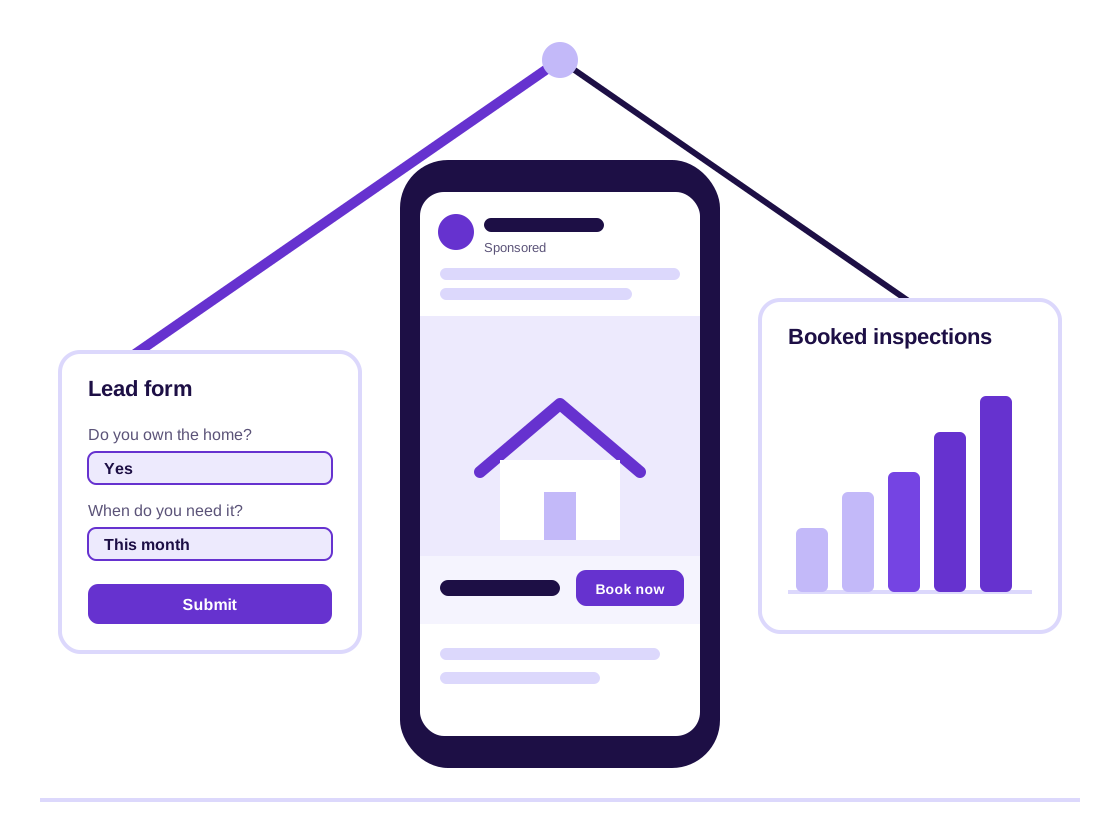
Meta’s instant forms let people ask for an inspection without leaving Facebook. We add a review screen and a few questions, such as whether they own the home and how soon they want the work done, so you get fewer junk leads.
Retargeting
People who visited your website or watched your videos see your ads again, with reviews, finished jobs or a financing offer, while they’re still making up their minds.
Storm response
After hail or a windstorm, we run ads in the affected areas offering storm damage inspections and help with insurance claims, then turn them off once your schedule fills up.
Seasonal offers
A free inspection before winter, an early spring booking window or a financing offer for a limited time. A seasonal reason gives people a push to act now instead of “someday”.
Before-and-after and video
Photos and short clips of your own jobs: the old roof, the tear-off and the finished house. A 20-second video of you on a job site often does better than a polished stock ad.
Instagram and Reels
The same campaigns run on Instagram feeds, Stories and Reels, with vertical video made for the phone.
In Quebec, we run the ads and lead forms in French.
Targeting homeowners under Meta’s housing ad rules
Meta treats ads about housing, including housing repairs, as a special ad category, and those rules have applied to ads shown in Canada since December 2020. Roofing ads often fall under it. When they do:
- You can’t target by age or gender, so ads go to adults of all ages.
- You can’t pick single postal codes, and every location you target has to include a minimum radius around it.
- Lookalike audiences aren’t available, and some detailed targeting options are limited.
Plenty of agencies still pitch “target homeowners aged 45 to 65 in these postal codes”. If your ads belong in the housing category and aren’t set up that way, Meta can reject them or restrict your ad account. We set campaigns up under the right rules from the start, then let the ad, the offer and the lead form questions do the filtering.
What makes a roofing ad work on Facebook
- Your own photos. Real pictures of your crew, your trucks and your finished roofs. People scroll straight past stock photos.
- A clear offer. A free inspection, a winter booking slot or financing, with a reason to reply now.
- The area in the ad. “Roofers serving Kanata and Orléans” tells people you’re local before they read anything else.
- Short phone video. The owner or a crew lead explaining one thing homeowners worry about, such as what happens if it rains during a tear-off.
- Fresh ads every few weeks. In a small service area, the same people see your ads over and over, and results drop once they’re tired of them.
We write the ads and plan the shots. You send us photos and short clips from your jobs.
Turning Facebook leads into booked inspections
Most Facebook leads are lost after the form, not before it. Someone fills it in at 9 p.m. on the couch, nobody calls for two days, and by then they’ve forgotten who you are.
We help you set up follow-up that keeps up with the leads:
- Leads go straight to your phone, email or CRM, such as JobNimbus, AccuLynx or Jobber, the moment they come in.
- An automatic text confirms the request right away and says who will call.
- Your team calls within the hour during business hours, and first thing in the morning for leads that come in overnight.
- People who don’t pick up get a few short follow-ups over the next several days.
If you want to email or text leads about other offers later, the lead form needs a consent checkbox under Canada’s anti-spam law (CASL). We add it, with wording that matches what you plan to send.
Tracking leads to booked jobs
We set up the Meta Pixel and the Conversions API on your website, so Meta can see form submissions and calls from people who clicked your ads, even when browsers block some tracking. Lead form results are connected to your CRM, and booked inspections are sent back to Meta. That way Meta looks for more people like the ones who booked, rather than more people who like filling in forms.
Your monthly report shows spend, leads, cost per lead and cost per booked inspection for each campaign.
Setting your Facebook ads budget
Ad spend is paid to Meta directly and is separate from our management. How much you need depends on the size of your service area, the jobs you want and how many leads your team can handle.
One thing worth knowing: Meta’s delivery system settles best when an ad set gets around 50 results a week. Small budgets split across too many ad sets never get there, so we keep the structure simple and put the money behind fewer campaigns. In the free review, we’ll suggest a starting budget for your area.
Facebook ads or Google Ads?
Google catches people who are already looking for a roofer. Facebook reaches people who aren’t looking yet. Google leads are usually ready to book sooner. Facebook leads often cost less but need more follow-up.
Many roofers use Google for urgent work and Facebook for replacements, storm work and seasonal pushes. See Google Ads for roofers and Local Services Ads for roofers for the search side.
How we run Facebook ads for roofers
1. Review and plan
We look at your area, your jobs and any past campaigns, then pick the offers and campaigns to start with.
2. Tracking and forms
We set up the Meta Pixel, the Conversions API, your lead forms and the link to your CRM, and test that every lead arrives.
3. Launch and test
We run a few ads and offers against each other, then put the budget behind what brings in booked inspections.
4. Refresh and report
New ads go in every few weeks, and each month you get a report on leads, cost per lead and booked inspections.
What we need from you: admin access to your Facebook Page and Meta business account, access to your website, photos and clips from your jobs, your service areas, and the name of whoever calls leads back.
Facebook ads for roofers questions
Do Facebook ads work for roofers?
For planned work, yes: replacements, storm damage inspections, seasonal offers and financing. For emergency leaks, Google usually works better, because people with a leak search rather than scroll.
Why are my Facebook leads such low quality?
Usually it’s a form that asks nothing, an offer that sounds too good, or slow follow-up. Adding a review screen and a couple of qualifying questions, and calling leads quickly, makes the biggest difference.
Can I target homeowners of a certain age?
Usually not. Roofing ads in Canada often fall under Meta’s housing ad category, which doesn’t allow age, gender or postal code targeting. We set campaigns up under those rules so your ads keep running.
How much should I spend on Facebook ads?
It depends on your service area and how many leads you can handle. Meta needs enough results each week to learn, so a focused budget on one or two campaigns works better than a little money spread everywhere. We’ll suggest a starting budget in the free review.
Lead forms or my website?
Lead forms bring in more leads, because people don’t leave Facebook. Website landing pages usually bring fewer but more serious ones. We often test both and keep what produces more booked inspections.
How fast should we call Facebook leads?
As fast as you can. A lead called within the hour remembers your ad. A lead called two days later often doesn’t.
Do you make the ads?
We write the ads and plan the photos and videos. You send us pictures and short clips from your jobs, since your own work does better than stock images.
Can I buy Facebook ads management on its own?
Yes. It’s sold on its own or alongside Google Ads, SEO or other services.
Get a free Facebook ads review
Already running Facebook or Instagram ads? Send us your details and we’ll look at your campaigns, lead forms and follow-up. Not running them yet? Tell us your cities and the jobs you want more of, and we’ll tell you honestly whether Facebook is worth trying.